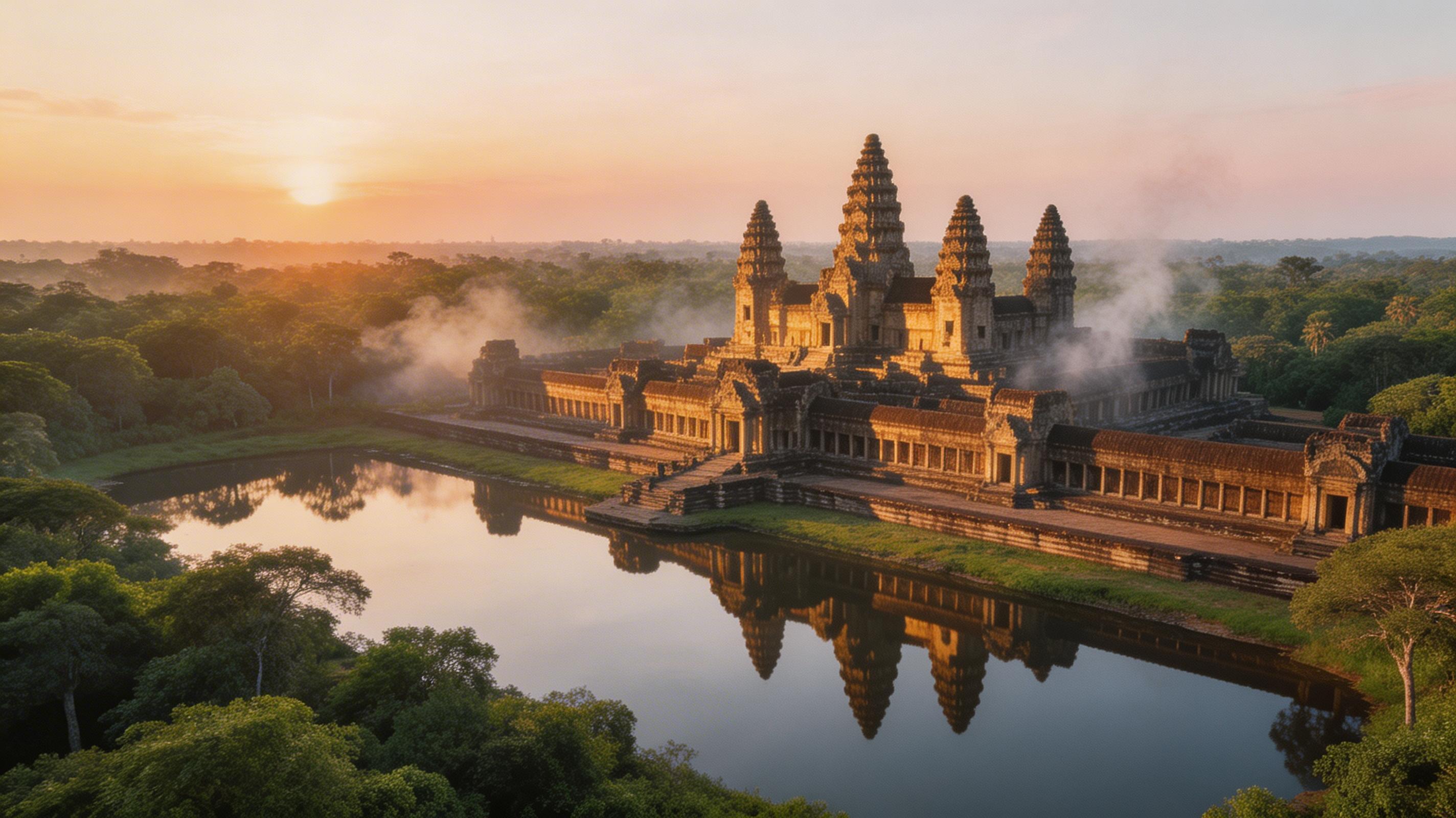
Angkor Wat temple complex at sunrise reflected in moat, Cambodia jungle heritage landscape
πŸ“ Siem Reap, Cambodia

Your Essential Guide to
Angkor Wat & The Temples of Angkor

Expert travel tips, historical insights, and everything you need to plan the perfect visit to the world's largest religious monument and UNESCO World Heritage Site.

πŸ“– 12 In-Depth Articles ⏱️ 17 min read πŸ“… Updated March 2026 πŸ—ΊοΈ Independent Travel Guide
Explore Articles ↓
SCROLL↓
401kmΒ²
Archaeological Park
9th C
Founded
2M+
Annual Visitors
UNESCO
World Heritage 1992

The Ancient Wonder of Southeast Asia

Angkor Wat is the centrepiece of the Angkor Archaeological Park β€” a vast complex of temples, reservoirs, and ancient cities built by the Khmer Empire between the 9th and 15th centuries in what is now northwestern Cambodia. At 401 square kilometres, it is the largest religious monument ever constructed, and one of humanity's greatest architectural achievements.

Beyond the iconic spires of Angkor Wat itself lie hundreds of other temples waiting to be explored β€” from the jungle-engulfed ruins of Ta Prohm to the serene faces of the Bayon, from the pink sandstone of Banteay Srei to the mountain temple of Bakheng. This guide covers everything you need for an extraordinary visit.

Explore Our Guides
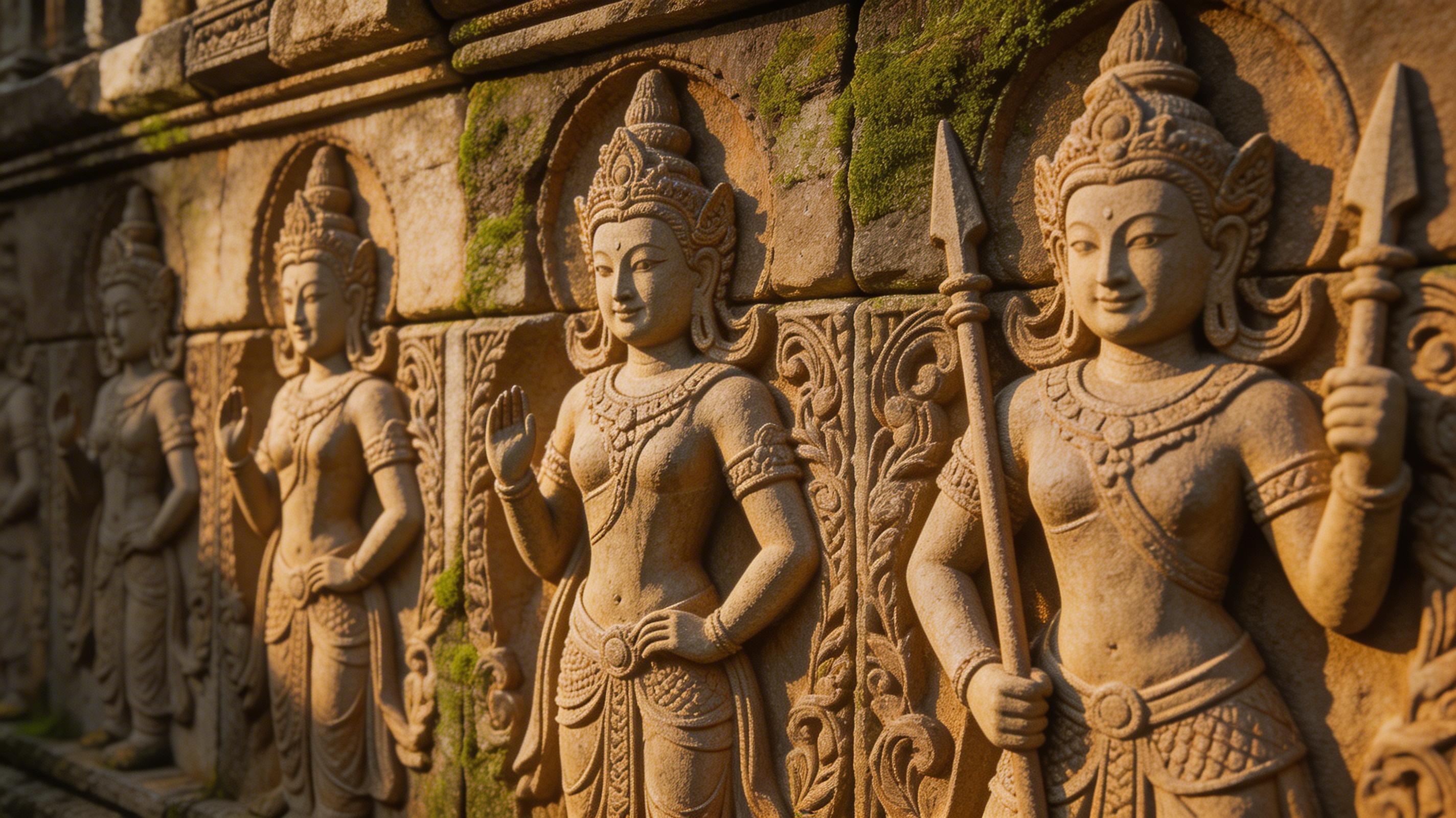
Intricate Khmer bas-relief stone carvings apsara dancers ancient temple wall Angkor

Complete Angkor Wat Travel Articles

Expert-written guides covering every aspect of your visit β€” from first-timer essentials and temple highlights to photography tips and cultural insights.

First timer complete guide Angkor Wat sunrise visit planning tips CambodiaEssential Guide
πŸ“… March 10, 2026⏱️ 8 min read

Complete First-Timer's Guide to Angkor Wat

Planning your first visit to Angkor Wat? This comprehensive guide covers everything β€” from purchasing your pass and choosing the right temple circuit, to the best time to arrive, what to wear, and how to structure your day across the vast archaeological park.

The Angkor Archaeological Park is far larger than most visitors anticipate. The park covers 401 square kilometres and contains hundreds of ancient structures β€” visiting everything in a single day is impossible, and attempting to rush it would be a disservice to one of the world's most extraordinary heritage sites. Most visitors spend between 2 and 4 days exploring the park's highlights.

Temple passes: Access to the park requires a valid Angkor Pass, available in 1-day, 3-day (valid over 10 days), and 7-day (valid over one month) options. Passes are purchased at the official ticket centre on the Siem Reap–Angkor road. The 3-day pass represents excellent value for most visitors and allows a more relaxed, comprehensive experience. Passes include a photograph taken at the ticket centre β€” bring your passport.

The Small Circuit vs the Grand Circuit: First-time visitors typically follow the Small Circuit, which covers the core temples including Angkor Wat, the Bayon, Baphuon, the Terrace of the Elephants, and Ta Prohm. The Grand Circuit extends to more remote temples including Preah Khan, Neak Pean, and Ta Som. Tuk-tuks and minibuses follow these established routes β€” your driver will be familiar with both.

Sunrise at Angkor Wat: Watching the sun rise behind Angkor Wat's towers β€” its reflection shimmering in the northern reflecting pool β€” is one of the world's great travel experiences. Arrive at the western causeway at least 45 minutes before dawn. Passes are valid from 5:00 AM to allow for sunrise visits. The eastern entrance to the temple complex is used at sunrise, while the main western entrance is used throughout the day.
Angkor Wat main temple architecture five towers Khmer design UNESCO heritageAttractions
πŸ“… March 7, 2026⏱️ 7 min read

Angkor Wat: Inside the World's Largest Religious Monument

Angkor Wat itself β€” the great temple at the heart of the archaeological park β€” deserves at least half a day of dedicated exploration. This guide walks you through its galleries, towers, bas-reliefs, and hidden corners, revealing details that most visitors miss entirely.

Angkor Wat was constructed in the early 12th century by the Khmer king Suryavarman II, dedicated to the Hindu god Vishnu. It covers 1.6 square kilometres and is surrounded by a 190-metre-wide moat that remains one of the largest ancient reservoirs in the world. The approach via the 475-metre western causeway gives visitors their first sense of the temple's extraordinary scale β€” the five lotus-bud towers rising above the jungle canopy.

The bas-relief galleries: Angkor Wat's most extraordinary interior feature is its 800-metre continuous bas-relief gallery β€” the longest continuous narrative carving in the world. The gallery depicts eight scenes from Hindu mythology and Khmer history: the Churning of the Ocean of Milk, the Battle of Kurukshetra, heaven and hell, historical processions, and mythological battles. Allow at least 45 minutes just for the galleries; guided tours provide context that transforms the carvings from remarkable art into genuine narrative.

The upper sanctuary: The steep climb to the upper level of Angkor Wat (approximately 40Β° angle staircases, partially equipped with handrails) rewards visitors with intimate views of the five central towers and panoramic sight lines across the jungle canopy. Access to the upper sanctuary is managed with timed entry slots to control crowding β€” dress code requirements (covered knees and shoulders) are strictly enforced at this level.

West-facing orientation: Angkor Wat is the only major Khmer temple oriented towards the west β€” traditionally the direction of death and the setting sun in Khmer cosmology. This has led scholars to debate whether it was built as a funerary temple for King Suryavarman II. The western orientation makes it uniquely suited for sunrise photography from the east, and for the dramatic afternoon light that illuminates its western facade.

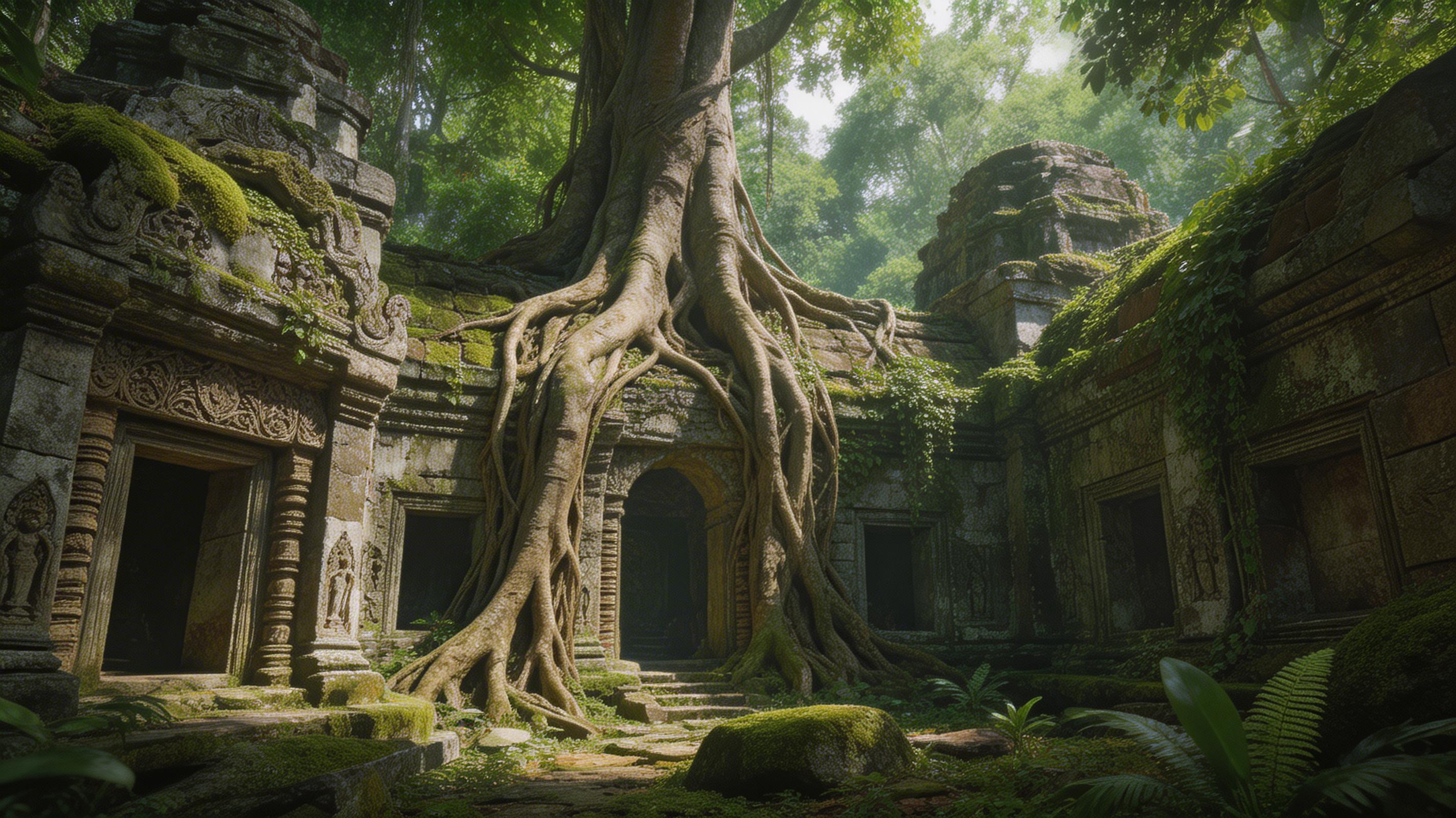
Ta Prohm jungle temple tree roots engulfing ancient Khmer ruins CambodiaTemple Highlights
πŸ“… March 4, 2026⏱️ 6 min read

Ta Prohm, Bayon & the Must-See Temples Beyond Angkor Wat

The Angkor Archaeological Park contains over 200 temples, but a handful stand apart as unmissable. Ta Prohm's jungle-entangled ruins, the Bayon's 216 serene stone faces, Banteay Srei's intricate pink carvings, and Preah Khan's atmospheric corridors each offer an experience entirely unlike Angkor Wat itself.

Ta Prohm is Angkor's most atmospheric temple β€” the one where the jungle has been deliberately left to reclaim the ruins. Massive silk-cotton and strangler fig trees have split walls, lifted stone blocks, and wrapped their roots around galleries in scenes of extraordinary natural drama. The temple was left intentionally unrestored to illustrate what the entire park looked like before conservation began. Allow 1–2 hours; visit in the morning before tour groups arrive for the most peaceful experience.

The Bayon at the centre of Angkor Thom is arguably the most mysterious temple in the park. Its 54 towers are adorned with 216 enormous stone faces β€” serene, enigmatic, smiling countenances that watch visitors from every direction. The temple was built by Jayavarman VII in the late 12th century as a Buddhist state temple, representing a dramatic shift from the Hindu orientation of earlier Khmer architecture. The Bayon's bas-reliefs on the lower galleries depict everyday Khmer life with a warmth and humanity that contrasts powerfully with the grander mythological scenes at Angkor Wat.

Banteay Srei β€” the "Citadel of the Women" β€” is located 25 kilometres northeast of Angkor Wat and is widely considered the jewel of Khmer art. Built in the 10th century from reddish pink sandstone rather than the grey laterite and sandstone of most other temples, it features carvings of unrivalled delicacy and detail. Though smaller than the major temples, its artistic quality is extraordinary β€” the lintel carvings above its doorways are particularly celebrated.

Preah Khan offers one of the park's most rewarding explorations for those willing to venture beyond the main circuit. This vast 12th-century temple-city served as the temporary capital of the Khmer Empire and contains an extraordinary sequence of galleries, courtyards, and gopuras. Much of it remains partially unrestored, giving it a raw, exploratory atmosphere that contrasts with the managed experience of the main temples.

Khmer Empire history Angkor civilisation archaeology UNESCO heritage CambodiaHistory
πŸ“… February 28, 2026⏱️ 8 min read

The Khmer Empire: History & Heritage of Angkor

The temples of Angkor were built over five centuries by one of Southeast Asia's most sophisticated civilisations β€” the Khmer Empire. Understanding the history behind these extraordinary structures transforms a sightseeing trip into a genuinely moving encounter with humanity's past.

The Khmer Empire was the dominant power in mainland Southeast Asia from approximately the 9th to the 15th century, at its zenith controlling territory spanning modern Cambodia, Thailand, Laos, and Vietnam. Its capital at Angkor β€” meaning "city" in Khmer β€” was, at its peak in the 12th century, the largest pre-industrial city in the world, with an estimated population of 750,000 to 1 million people and an urban footprint comparable to modern-day Los Angeles.

Foundation and golden age: The empire was founded in 802 CE when King Jayavarman II performed a ritual ceremony declaring himself a devaraja β€” a god-king β€” and establishing Khmer independence from Javanese suzerainty. Successive kings expanded the empire's territory and constructed increasingly ambitious temple complexes. The golden age reached its peak under Suryavarman II (Angkor Wat, 1113–1150) and Jayavarman VII (Bayon and Angkor Thom, c. 1180–1220).

The hydraulic civilisation: Angkor's extraordinary scale was made possible by an equally extraordinary water management system. A network of canals, reservoirs (barays), and moats covering hundreds of square kilometres controlled water flow across the flat Cambodian plain, enabling year-round rice cultivation and supporting the city's enormous population. The West Baray β€” still partially intact β€” measured 8 by 2.2 kilometres, an engineering achievement of staggering ambition for the 11th century.

Decline and abandonment: The reasons for Angkor's decline and eventual abandonment in the 15th century remain debated by scholars. Contributing factors likely include prolonged drought (evidenced by tree ring data), repeated Thai attacks from the Ayutthaya Kingdom, ecological stress from deforestation and silting of the hydraulic network, and a shift in Khmer economic orientation from inland rice agriculture to coastal maritime trade. By the 16th century, the jungle had begun to reclaim the temples β€” though Angkor Wat itself was never entirely abandoned and remained an active Buddhist shrine throughout the subsequent centuries.

Angkor Wat sunset Phnom Bakheng hilltop temple panoramic view CambodiaPhotography
πŸ“… February 24, 2026⏱️ 6 min read

Photography Guide: Capturing the Magic of Angkor

Angkor is one of the world's great photography destinations β€” ancient stone, dramatic jungle, extraordinary light, and a seemingly infinite variety of perspectives. Whether you're shooting with a professional camera or a smartphone, this guide will help you capture images that do justice to this extraordinary place.

Sunrise at the northern reflecting pool: The classic Angkor Wat sunrise shot is taken from the northern reflecting pool β€” the long rectangular pond on the left side of the western causeway. Position yourself at the northern end of the pool facing east before dawn. As light grows, Angkor Wat's five towers are reflected perfectly in the still water, with the sky above shifting through indigo, purple, orange, and gold. This image requires no special equipment β€” even a smartphone on a flat surface produces remarkable results.

Golden hour light: The temples of Angkor are built from sandstone and laterite that glows warm amber in golden hour light (30–45 minutes before sunset). The western-facing temples β€” particularly Angkor Wat and Baphuon β€” are best in late afternoon when they're bathed in full sun. East-facing temples are better in morning light. The Bayon's stone faces, deeply carved and textured, come alive under raking morning light from the east.

Ta Prohm for jungle photography: Ta Prohm provides extraordinary opportunities for dramatic compositions β€” tree roots cascading over stone blocks, fig trees framing doorways, dappled jungle light filtering through fractured walls. Visit in the first hour after opening (7:30 AM) before tour groups arrive. The eastern entrance (less used than the western) often provides quieter compositions. A wide-angle lens captures the full drama of the root-engulfed galleries; a longer lens isolates remarkable details.

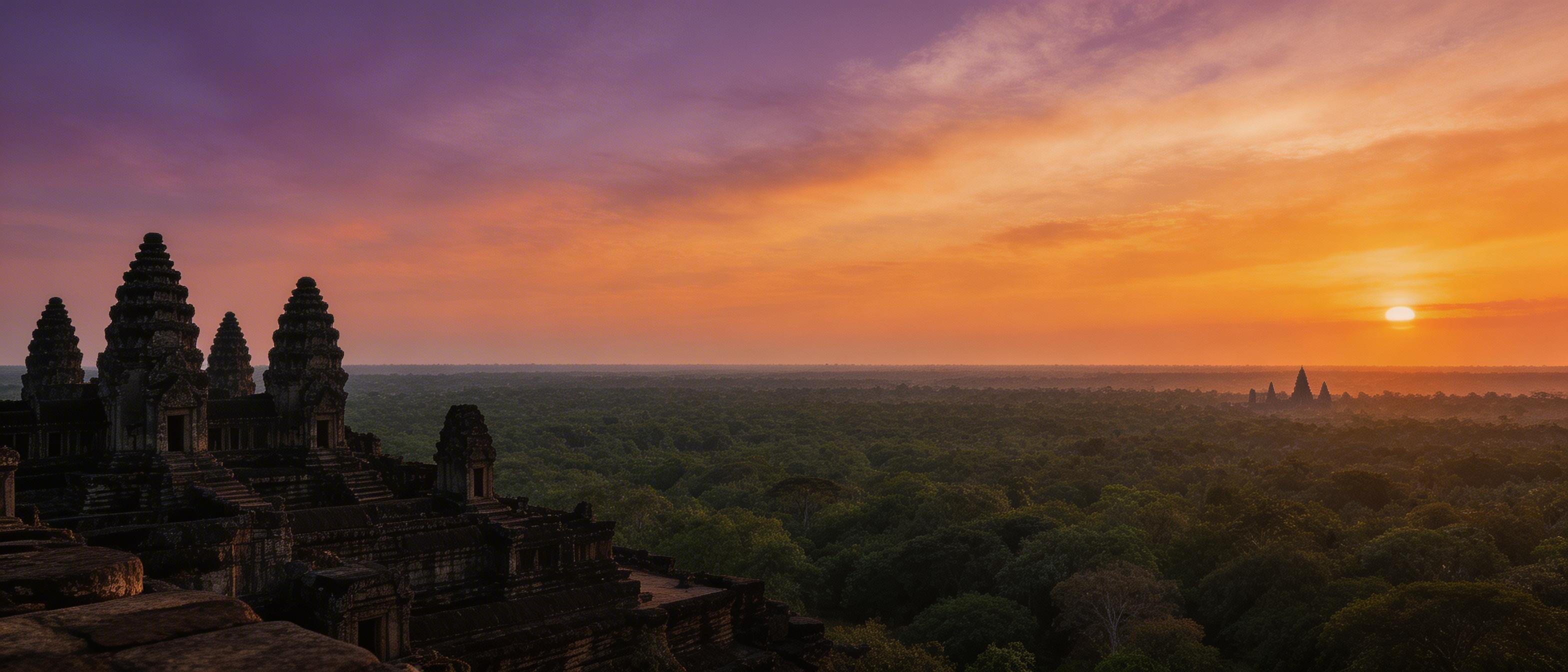
Sunset from Phnom Bakheng: The hilltop temple of Phnom Bakheng offers the most dramatic sunset panorama in the park β€” Angkor Wat visible in the middle distance surrounded by jungle stretching to the horizon. Access is timed and capped at 300 visitors to prevent overcrowding; arrive at least 2 hours before sunset to queue for your time slot. Bring a telephoto lens to compress the distance between Bakheng and Angkor Wat's silhouetted towers against the sunset sky.

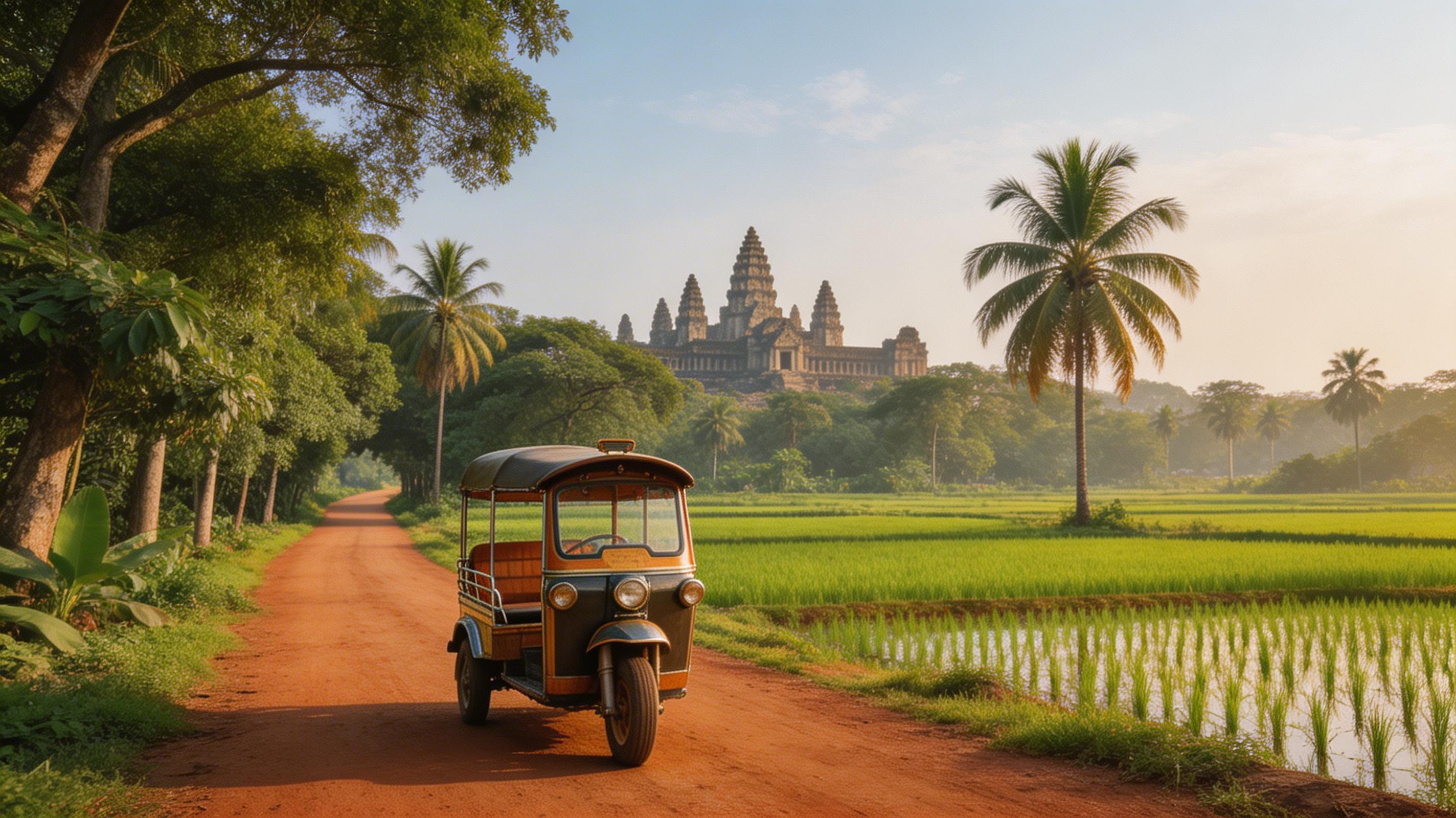
Siem Reap tuk-tuk transport how to get around Angkor temples CambodiaTravel Tips
πŸ“… February 20, 2026⏱️ 5 min read

How to Get There & Get Around: Siem Reap & Angkor Transport Guide

Siem Reap is the gateway city to the Angkor temples, located approximately 6 kilometres from the main archaeological park. Getting to Siem Reap and navigating between the temples is straightforward, with several transportation options to suit different budgets and itineraries.

Getting to Siem Reap: The city is served by Siem Reap–Angkor International Airport (SAI), which opened in 2023 and handles direct international flights from Bangkok, Singapore, Kuala Lumpur, Ho Chi Minh City, and other regional hubs. The journey from the airport to the city centre takes approximately 30 minutes by taxi or tuk-tuk. Several budget airlines serve the route, making Siem Reap very accessible from anywhere in Southeast Asia.

The tuk-tuk: The most popular way to explore Angkor is by tuk-tuk β€” a two-wheeled carriage pulled by a motorbike, unique to Cambodia. Tuk-tuks are affordable, flexible, and atmospheric. A full-day tuk-tuk hire for the Small Circuit costs approximately USD 15–20; the Grand Circuit adds USD 5–10. Your tuk-tuk driver typically waits at each temple while you explore and acts as an informal guide to timing and logistics. Negotiate the price the evening before your temple day.

Bicycle: For the physically inclined, cycling through the Angkor Archaeological Park is one of the great travel experiences in Southeast Asia. Bicycles are available for hire throughout Siem Reap for USD 3–8 per day. The roads within the park are well-surfaced and relatively flat. Cycling allows you to stop spontaneously at minor temples, explore rural areas between sites, and experience the park's landscape at a human pace. Start early (5:30 AM for sunrise) and carry plenty of water.

Electric bike and minibus: For visitors who want more ground coverage without physical effort, electric bikes (e-bikes) are available for hire and cover the circuits comfortably. Organised minibus tours from Siem Reap hotels are available for those who prefer a guided experience with air-conditioned transport. Private car hire with driver is also available for approximately USD 35–50 per day and is popular with families and older visitors.

Angkor temple jungle wildlife birds bats nature Cambodia ecologyNature & Wildlife
πŸ“… February 16, 2026⏱️ 5 min read

Flora, Fauna & the Jungle Ecosystem of Angkor

The Angkor Archaeological Park is not merely an archaeological site β€” it is also a functioning tropical ecosystem supporting remarkable biodiversity. The forests, waterways, and ancient stonework together create habitats for a surprising variety of wildlife, from monkeys and bats to rare birds and giant monitor lizards.

The forest surrounding and penetrating the Angkor temples is a secondary tropical dry forest β€” a ecosystem that has regenerated over the centuries since the Khmer Empire cleared much of the original jungle for agriculture and construction. Today it supports a rich canopy of silk-cotton trees, dipterocarp species, banyan and strangler figs, and the iconic tetrameles trees whose vast root systems engulf Ta Prohm and Preah Khan in some of the most dramatic botanical-architectural tableaux on Earth.

Mammals: Long-tailed macaques are the most visible mammals in the park β€” playful and bold, they congregate around the main temples, particularly around Angkor Wat and Ta Prohm. Large water monitor lizards (up to 1.5 metres) are commonly encountered near the moats and waterways. The park's more remote areas shelter smaller deer, civets, and porcupines, though these are rarely seen by daytime visitors.

Birds: Angkor is excellent for birdwatching, particularly in the quieter morning hours. Species commonly observed include oriental pied hornbills, green peafowl, various kingfisher species, reef egrets around the moats, and large gatherings of Cambodian swifts nesting in the temple towers. The annual bat exodus from Phnom Bakheng hill at dusk β€” thousands of wrinkle-lipped bats emerging from caves β€” is one of the park's more unusual natural spectacles.

The trees of Ta Prohm: The most photographed trees in Angkor are the silk-cotton trees (Ceiba pentandra) and strangler figs (Ficus gibbosa) that have colonised Ta Prohm over centuries. Their root systems β€” some individual roots measuring over 3 metres in diameter β€” have wrapped around, penetrated, and in many cases structurally compromised the temple walls. Conservation teams continually assess the balance between preserving the dramatic visual effect and preventing irreparable structural damage to the stone.

Family visiting Angkor Wat Cambodia children temple guide tipsFamily Travel
πŸ“… February 12, 2026⏱️ 5 min read

Family Guide: Visiting Angkor Wat with Children

Angkor Wat with children requires careful planning β€” but done right, it can be a genuinely transformative family experience. The temples' scale, mystery, and jungle setting fire children's imaginations in ways that few heritage sites can match. Here's how to make the most of a family visit.

Age considerations: Children aged 7 and above typically find the Angkor experience genuinely engaging β€” the jungle temples feel like adventure rather than sightseeing. Younger children can certainly visit, but the heat, walking distances, and lack of shaded rest areas make it more challenging. Budget shorter temple sessions (90 minutes maximum) with rest breaks, and plan your heaviest temple days for overcast or cooler mornings.

Best temples for kids: Ta Prohm is universally popular with children β€” the tree roots engulfing the ruins feel genuinely magical and adventurous. The Bayon's enormous stone faces are endlessly fascinating and photogenic. Angkor Wat's steep interior staircases and multiple levels to explore appeal to children who enjoy climbing and discovering hidden spaces. Avoid less-visited, smaller temples for family days β€” stick to the main sites that offer the most visual drama for the effort required.

Managing the heat: Cambodia's tropical climate means temperatures regularly exceed 32Β°C during temple hours. Plan temple visits for early morning (5:30–11:00 AM) and late afternoon (4:00–6:00 PM), taking a midday break at your hotel or a Siem Reap restaurant. Carry ample water β€” at least 1.5 litres per person per half-day β€” and apply high-SPF sunscreen generously. Many temple areas offer little shade; a light-coloured long-sleeved shirt provides better sun protection than sunscreen alone.

Dress code: All visitors β€” including children β€” must have shoulders and knees covered to enter Angkor Wat's upper level and most other temple sanctuaries. Light cotton or linen trousers and shirts are ideal. Comfortable walking shoes (not sandals) are strongly recommended given the uneven stone surfaces throughout the park. Children's sandals with back straps are acceptable for younger visitors.

Angkor Wat cultural significance Buddhism Hinduism spiritual heritage CambodiaCulture
πŸ“… February 8, 2026⏱️ 6 min read

Sacred Stones: The Cultural & Spiritual Significance of Angkor

The temples of Angkor were not built as tourist attractions β€” they were living religious centres, cosmic maps in stone, and expressions of royal divine authority. Understanding their spiritual significance transforms the experience from architectural wonder to something far more profound.

Angkor Wat was originally dedicated to Vishnu, the Hindu god of preservation, making it the world's largest Hindu temple. Its design embodies Hindu cosmology: the five towers represent Mount Meru, the mythological home of the gods at the centre of the universe; the surrounding moat represents the primordial ocean; the temple galleries represent the mountain ranges surrounding Meru. Walking from the outer walls inward symbolises the spiritual journey from the material world to the divine centre.

The transition to Buddhism: By the late 12th century, under Jayavarman VII, the Khmer Empire shifted from Hinduism to Theravada Buddhism. Angkor Wat was rededicated as a Buddhist temple β€” a transition that was remarkably peaceful, with Hindu iconography largely preserved alongside newly added Buddhist imagery. Today, Angkor Wat remains an active Buddhist site, and the resident monks who live in the complex maintain its spiritual function nearly a thousand years after construction.

Behavioural etiquette: Because Angkor Wat is an active religious site, visitors are expected to behave respectfully. Cover your shoulders and knees throughout the complex. Remove shoes before entering shrine rooms (look for the shoe pile at doorways). Keep voices low near active meditation or worship areas. Photography of monks requires permission. Do not sit on or climb statues, lingas, or any clearly sacred objects β€” it is both disrespectful and can cause irreparable damage to irreplaceable heritage.

The living culture of modern Cambodia: The temples of Angkor appear on the Cambodian national flag β€” the only building to appear on any national flag in the world β€” underscoring their role as the supreme symbol of Cambodian national identity and civilisational pride. For Cambodian visitors, Angkor is not merely a heritage site but a living connection to a glorious past that gives context and meaning to the country's complex contemporary history. Visiting with this awareness enriches the experience immeasurably.

Siem Reap nearby attractions floating village Tonle Sap lake CambodiaNearby Attractions
πŸ“… February 4, 2026⏱️ 5 min read

Beyond the Temples: Siem Reap & Nearby Attractions

Siem Reap has transformed from a quiet provincial town into one of Southeast Asia's most vibrant travel destinations. Beyond the temples, the surrounding region offers floating villages, the world's largest freshwater lake, silk farms, cookery schools, and some of the most vibrant street food scenes in Cambodia.

Tonle Sap Lake: The Tonle Sap is the largest freshwater lake in Southeast Asia β€” a remarkable body of water that expands from approximately 2,500 square kilometres in the dry season to over 16,000 square kilometres during the monsoon floods. Boat tours from Siem Reap visit the floating villages of Chong Kneas or Kampong Phluk, where entire communities live on houseboats and stilted platforms year-round. The lake supports one of the world's most productive freshwater fisheries and an extraordinary diversity of water birds including painted storks, spot-billed pelicans, and the critically endangered giant ibis.

Siem Reap's Old Market area: The Phsar Chas (Old Market) district is the heart of Siem Reap's food and craft scene. The covered market sells everything from fresh local produce to silver jewellery, Cambodian silk, Angkor-inspired artwork, and wood carvings. The streets surrounding the market β€” particularly Pub Street and the surrounding lanes β€” offer an extraordinary density of restaurants, cafΓ©s, and street food vendors. Sample amok (fish curry steamed in banana leaves), lok lak (wok-fried beef with lime-pepper dipping sauce), and nom banh chok (Khmer noodles with fish sauce gravy).

Artisans Angkor: A remarkable social enterprise employing Cambodian artisans to revive traditional Khmer craft techniques, Artisans Angkor operates workshops and showrooms in Siem Reap where visitors can watch craftspeople produce silk weaving, lacquerware, stone and wood carving, and silver work. Guided tours of the workshops are free and educational. The retail outlet sells high-quality, ethically produced Cambodian crafts at fair prices β€” far better quality than market souvenirs.

Banteay Srei Butterfly Centre: Located near Banteay Srei temple, this community conservation project maintains a large butterfly house containing dozens of species of Cambodian butterflies in a lush garden setting. The centre supports local families through sustainable tourism and conservation education. An excellent addition to a half-day trip to Banteay Srei and the Remote Angkor temples northeast of the main park.

Angkor conservation UNESCO restoration sustainability responsible tourism CambodiaSustainability
πŸ“… January 30, 2026⏱️ 5 min read

Responsible Tourism & Conservation at Angkor

Angkor faces significant conservation challenges from the twin pressures of mass tourism and climate change. Understanding how to visit responsibly β€” and how your presence contributes to (or detracts from) the site's preservation β€” is an essential part of planning an ethical visit.

The Angkor Archaeological Park was inscribed on the UNESCO World Heritage List in 1992, shortly after the end of Cambodia's devastating civil war. Since then, it has been the subject of one of the most ambitious cultural heritage conservation programmes in the world, with teams from France, Japan, Germany, India, China, the United States, and Cambodia working simultaneously on different temples and areas of the park.

Conservation challenges: The sheer volume of visitors β€” over 2 million annually before the pandemic β€” has placed enormous stress on the stone structures. Vibrations from tour buses, humidity from human breath, physical contact with carvings, and the deposition of oils from millions of hands have accelerated deterioration. Many of the most detailed bas-reliefs are now protected behind glass or cordoned barriers that were not in place a decade ago. The APSARA Authority (the Cambodian national agency responsible for Angkor) continues to develop visitor management systems to balance access with preservation.

How to visit responsibly: Never touch or climb on carvings, statues, or architectural elements. Stay on established paths. Do not remove any stones, fragments, or plant material. Hire licensed, APSARA-certified guides who contribute to the local economy and ensure visitors receive accurate information. Support community-based tourism initiatives in villages surrounding the park. Purchase souvenirs from Artisans Angkor or equivalent ethical retailers rather than vendors selling mass-produced goods.

Where your entry fee goes: Angkor Pass revenue β€” totalling over USD 100 million annually at pre-pandemic visitor levels β€” funds the APSARA Authority's conservation, research, and community development programmes. It represents Cambodia's single largest source of tourism revenue and funds significant social infrastructure across the Siem Reap province. Visiting Angkor is, therefore, a direct contribution to both heritage preservation and Cambodian economic development.

Angkor Wat accessibility guide solo traveller older visitors wheelchair CambodiaAccessibility
πŸ“… January 26, 2026⏱️ 5 min read

Accessibility & Practical Planning for Your Angkor Visit

Visiting the temples of Angkor requires physical preparation and practical planning. From accessibility considerations and health precautions to money matters and what to pack, this guide covers the practical essentials for a safe, comfortable, and fully enjoyable experience.

Physical accessibility: The main temples of Angkor present significant accessibility challenges for visitors with mobility impairments. Ancient stone surfaces are uneven, steps are steep and often without handrails, and distances between temples are substantial. Angkor Wat's ground-level galleries and outer courtyards are accessible by wheelchair with assistance, but the upper levels are not. Ta Prohm and the Bayon have similarly challenging terrain. Tuk-tuks can be adapted to accommodate wheelchairs; discuss requirements with your driver in advance. The park is working to improve accessibility infrastructure over time.

Health precautions: Consult your doctor before travel regarding recommended vaccinations for Cambodia (hepatitis A and B, typhoid, and tetanus are commonly recommended). Dengue fever is present in Cambodia; use insect repellent containing DEET throughout your visit. Drink only bottled or purified water. Apply high-factor sunscreen and wear a hat β€” heat exhaustion is a genuine risk for visitors unaccustomed to tropical temperatures. Carry oral rehydration salts if visiting during the hot season (March–May).

Currency and money: Cambodia uses a dual currency system β€” the official currency is the Cambodian Riel (KHR), but US dollars are universally accepted and preferred for larger transactions. Temple passes and most tourist services are priced in USD. Carry a mix of USD bills in small denominations (USD 1, 5, 10) for tuk-tuks, food stalls, and tips. ATMs in Siem Reap dispense USD. Credit cards are accepted at higher-end hotels and restaurants but not at most market stalls or temple vendors.

What to pack: Light, breathable clothing that covers shoulders and knees (required at temples). Comfortable closed-toe walking shoes. High-factor sunscreen and insect repellent. A wide-brimmed hat or cap. Minimum 1.5 litres of water per person for morning temple sessions. A small daypack for water and essentials. A portable phone charger. A physical paper map of the park as backup (phone signal within the park can be unreliable). A basic first aid kit including blister plasters for multi-day visits.

Essential Angkor Visitor Tips

Practical advice from experienced Cambodia travellers to help you get the most from your Angkor visit.

πŸŒ…

Arrive Before Sunrise

Angkor Wat at sunrise β€” its towers reflected in the northern reflecting pool against a dawn sky β€” is one of the world's great travel experiences. Passes are valid from 5:00 AM. Arrive by 5:15 AM to secure a good position at the pool before the main crowd arrives.

🎟️

Buy a 3-Day Pass

The 3-day pass (valid over any 10 days) represents excellent value and allows a relaxed, comprehensive exploration. A single day is not enough to do Angkor justice. Split your time: Day 1 Angkor Wat + Bayon, Day 2 Ta Prohm + Preah Khan, Day 3 Banteay Srei + sunset from Bakheng.

πŸ›Ί

Hire a Tuk-Tuk Driver

A reliable tuk-tuk driver is invaluable. Arrange one through your hotel the evening before your temple day. A good driver knows optimal timing for each temple and can be both guide and logistics coordinator. Negotiate a full-day rate (USD 15–20 for the Small Circuit).

πŸ‘•

Dress Appropriately

Shoulders and knees must be covered to enter Angkor Wat's upper sanctuary and most temple sanctuaries. Light cotton or linen trousers and long-sleeved shirts are ideal β€” they protect against sun and satisfy dress codes simultaneously. Keep a sarong or scarf accessible for unexpected requirements.

πŸ’§

Hydrate Aggressively

Cambodia's heat is intense β€” temperatures exceed 32Β°C even in the cooler season. Carry at least 1.5 litres of water per person per morning session. Take a full midday break (11:00 AM–3:00 PM) at your hotel or a shaded restaurant in Siem Reap to avoid heat exhaustion.

πŸ“Έ

Visit Ta Prohm Early

Ta Prohm's jungle ruins are extraordinary but get very crowded by mid-morning. Visit immediately after sunrise (7:00–8:30 AM) for the most atmospheric, crowd-free experience. The dappled morning light filtering through the jungle canopy is also the best for photography.

Best Time to Visit Angkor

Cambodia has two distinct seasons β€” understanding them is key to planning the right visit for your priorities.

❄️
Nov – Feb
Cool Dry Season
  • Best overall conditions
  • Temperatures 20–30Β°C
  • Peak tourist season
  • Green landscapes post-monsoon
β˜€οΈ
Mar – May
Hot Dry Season
  • Hottest period 35–40Β°C
  • Fewer tourists, lower prices
  • Moats at lowest level
  • Khmer New Year (April)
🌧️
Jun – Sep
Wet Season
  • Daily afternoon showers
  • Lush green jungle scenery
  • Dramatic storm light
  • Lowest tourist numbers
πŸ‚
Oct – Nov
Transition Season
  • Moats and barays full
  • Water Festival (October)
  • Improving conditions
  • Good value timing

Everything You Need to Know

Answers to the most common questions from first-time Angkor visitors.

Most visitors find 2–3 days ideal for a comprehensive experience. One day covers the main highlights (Angkor Wat, Bayon, Ta Prohm) but feels rushed. Three days allows a relaxed exploration of the Small and Grand Circuits plus a trip to Banteay Srei. The 3-day pass is valid over any 10-day period, so you can mix temple days with other Siem Reap experiences.

The Angkor Pass is required to enter the archaeological park and is available in 1-day, 3-day, and 7-day options. It is purchased at the official APSARA ticket centre on the road between Siem Reap and the temples β€” you cannot buy passes at the temple gates. Bring your passport as a photo is taken at purchase. Passes are checked at multiple points within the park and must be worn visibly at all times.

Shoulders and knees must be covered to enter Angkor Wat's upper sanctuary and most temple sanctuaries throughout the park. Light cotton or linen trousers and shirts are ideal β€” breathable, sun-protective, and dress-code compliant. Comfortable closed-toe walking shoes are strongly recommended given the uneven stone surfaces. Bring a hat and apply sunscreen β€” shade within the temples is limited and Cambodia's sun is intense year-round.

Siem Reap is generally considered safe for tourists and is one of Cambodia's most visited cities. The Angkor Archaeological Park has good security and a well-established tourism infrastructure. Standard travel precautions apply: keep valuables secure, use reputable transport, drink bottled water, and take appropriate health precautions. Check your government's current travel advisory before visiting. Landmine risk is restricted to areas outside the main tourist zones β€” stay on established paths within the park.

Angkor Wat itself is the classic and most rewarding sunrise location β€” its west-facing orientation means the sun rises behind the towers, and the reflection in the northern pool creates an iconic image. Arrive by 5:15 AM and position yourself at the northern end of the reflecting pool. Pre-Rup temple, with its elevated position and eastern orientation, offers an alternative sunrise experience away from the main crowd. Srah Srang reservoir is another excellent, quieter option for photographing the sunrise sky over water.

Yes β€” licensed guides are available for hire at the main temple entrances and through Siem Reap hotels and tour operators. An APSARA-certified licensed guide significantly enriches the experience, providing historical and cultural context that transforms the temples from impressive ruins into vivid, comprehensible history. Half-day guided tours of Angkor Wat typically cost USD 25–40 per group. For the full park, a full-day guide costs USD 40–60. Always verify guide licensing β€” look for the official APSARA guide badge.